Gin Rummy: play online for free (solo & multiplayer)
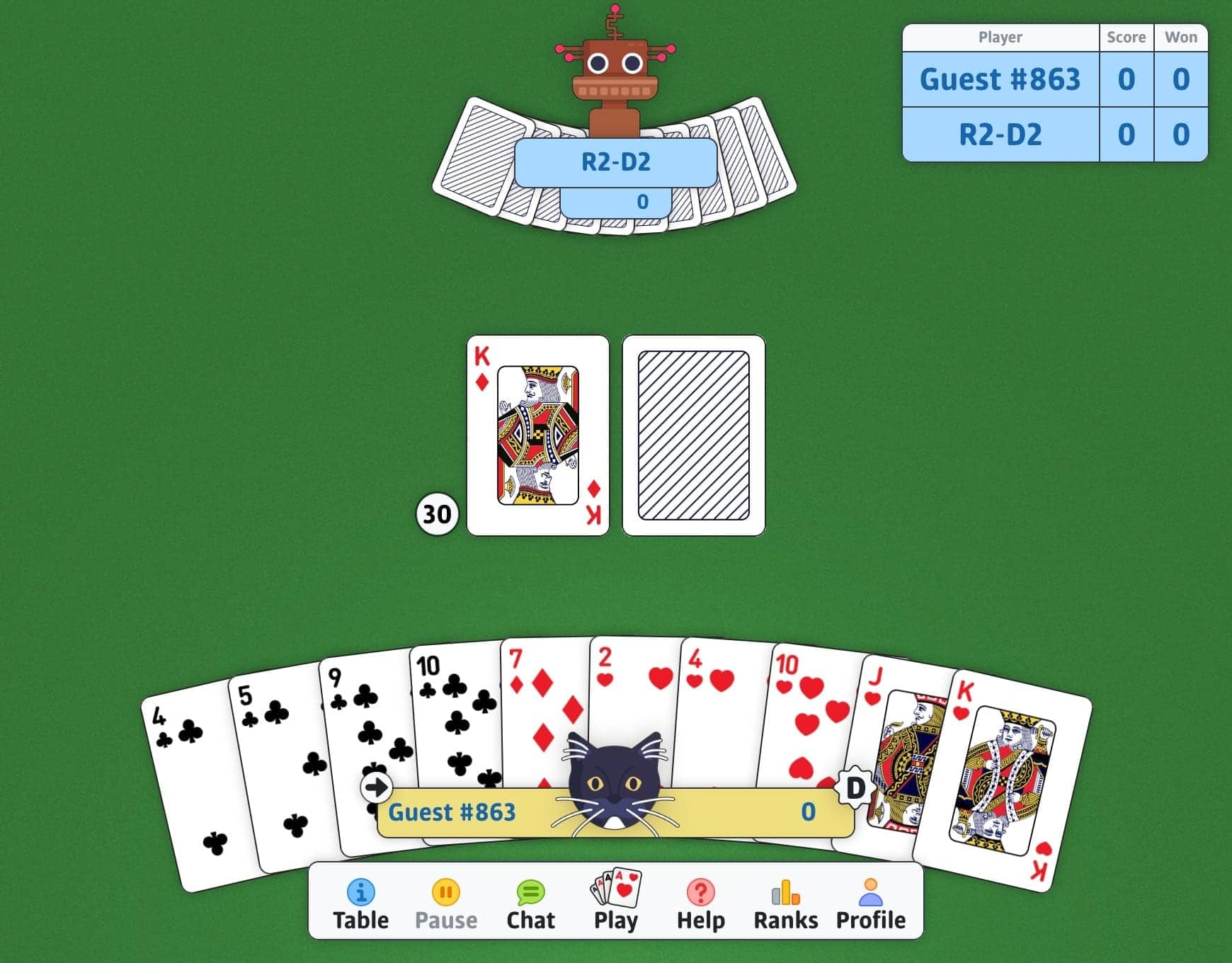
Gin Rummy is a fantastic 2-player game that is easy to learn and loads of fun to play. Unlike other card games like Hearts that revolve around taking or avoiding tricks, Gin Rummy is a draw-and-discard game. Your goal is to collect melds, either sets or runs. Winning takes both skill and luck. For the classic 4-player version, try Rummy. For another strategic two-player game, check out Cribbage.
Rate Gin Rummy
The game is free to play online. No signup or registration is required to get started. You have the option to play against the computer or other players online. You can either join a public table or create your own private table where you can invite friends and family to play. So get ready to create melds and outsmart your opponent!
Gin Rummy by the numbers
Real totals from every game of Gin Rummy played on World of Card Games, updated October 2026.
- Games played here: 11 million
- Combined playtime: 531 years
- Human players win: 44% of their finished games
Rules
Here's everything you need to play your first hand. For the complete reference and an interactive tutorial that walks you through a real game, see our guide on how to play Gin Rummy.
Objective
You're collecting melds. A meld is either a set of 3 or more cards of the same rank or a run of 3 or more cards of the same suit in consecutive order. Aces are always low, so Ace, 2, 3 of one suit is a run but a run can never wrap around the King. Cards that don't fit into any meld are called deadwood and each one costs points. An Ace counts 1, number cards count their face value and face cards count 10. You score by ending hands with less deadwood than your opponent. The game ends when a player reaches 100 points. After the end bonuses, the higher final score wins.
The deal and the up card
Both players get 10 cards from a standard 52-card deck and one card is turned face up beside it. A random player deals the first hand. After that, the loser of each hand deals the next one.
The first up card gets special treatment. The non-dealer decides first whether to take it into their hand or pass. If they pass, the dealer gets the same choice. If both pass, the non-dealer must draw an unknown card from the deck instead. Whenever you take the up card, you finish your turn by discarding a different card from your hand, never the up card itself. A card drawn from the deck may be discarded right away.
The play
After that opening, turns are simple. Draw one card, either the face-up card or an unknown card from the deck, then discard one card from your hand. Play passes back and forth until someone knocks. If a player discards without knocking when only two cards are left in the deck, the hand ends with no score and the same player deals again.
Knocking
Once your deadwood adds up to 10 points or less after discarding, you may knock, which ends the hand. Both players reveal their melds. Your opponent may then lay off deadwood cards that fit your melds, which lowers their own count. If you knock holding a set of three 10s and they have the fourth 10, they can add it to your set and save themselves 10 points.
Scoring and winning
If the knocker has less deadwood than their opponent, they score the difference. If the opponent's total is the same or lower, the knocker has been undercut and the opponent scores the difference plus a 10-point bonus. Knocking with zero deadwood is called going gin. Nothing can be laid off against a gin hand and the knocker scores all of their opponent's deadwood plus a 20-point bonus.
The game ends when someone reaches 100 points. Reach 100 first and you add a 100-point bonus (200 points if your opponent never won a hand). Each player then adds a line bonus of 20 points for every hand they won. The line bonus does not count toward the 100. The player with the higher final score wins the game.
How to win at Gin Rummy
Three skills decide most games. Draw without giving your plans away, discard safely, and know when to knock. The tips below sharpen all three. The Cool Old Games Gin Rummy guide goes deeper if you want more.
Drawing:
- Your opponent sees every card you take from the discard pile. If the up card is the 4 of Spades and you take it, they may guess you're collecting 4s and hold theirs back to block you. It's usually best to only take the up card when it completes a meld in your hand.
- Drawing from the deck tells your opponent nothing. When the up card doesn't clearly help you, take the unknown card and keep your hand unreadable.
Discarding:
- Watch what your opponent throws away. Their discards show which cards they don't need, so similar cards are usually safe for you to discard too. The dangerous discards are the ones close in rank or suit to cards they've picked up.
- Unmatched face cards are the most expensive deadwood in the game at 10 points each. If they haven't found a meld after a few turns, let them go.
- Low cards make cheap deadwood. An unmatched Ace or 2 barely hurts you when a hand ends, so they're comfortable cards to keep late in a hand.
Knocking:
- Stay alert to your own deadwood total as the hand runs on. The more cards get discarded, the better the chance your opponent has trimmed their hand enough to knock first.
- Going gin earns a 20-point bonus and blocks all layoffs, but waiting for that last perfect card gives your opponent time to knock. Weigh the bonus against the risk.
- Keep your deadwood low even when you can't knock. If your opponent knocks and your total is the same as theirs or lower, you undercut them and score the difference plus a 10-point bonus.
Frequently asked questions
What is deadwood in Gin Rummy?
Deadwood is any card in your hand that isn't part of a meld. Each deadwood card costs points, 1 for an Ace, face value for number cards and 10 for every face card. The whole game is about keeping that total low.
What does it mean to knock?
Knocking ends the hand. You may knock after discarding if your deadwood totals 10 points or less. Both players then show their melds, your opponent may lay off deadwood that fits your melds, and the player with less deadwood scores the difference.
What is going gin?
Going gin means knocking with zero deadwood, so all 10 of your cards belong to melds. Your opponent can't lay off anything against a gin hand and you score all of their deadwood plus a 20-point bonus.
How do I play Gin Rummy with friends?
Host a private table and invite your friend. Click the round yellow Play button at the table's top left to open the Play menu. Choose "Host table", turn on "Private table" and type a table name. At your new table, click "Invite players" and copy the link for your friend. Your friend can also choose "Join private" in the same menu and type the same name.
Can I play Gin Rummy against the computer?
Yes. This page starts you in a game against a bot right away. Playing a few games against a bot is a good way to learn the flow before facing live players. For another game, click the round yellow Play button to open the Play menu and choose "New game".
Can more than 2 people play Gin Rummy?
No. Gin Rummy is strictly a 2-player game. If you have a bigger group, try Rummy, the classic 4-player version of the same draw-and-discard idea.
How long does a game of Gin Rummy take?
About 15 minutes on average across the games played on this site. Individual hands are quick and a game runs until one player reaches 100 points.
Is Gin Rummy free to play here?
Yes. Gin Rummy is free in your browser with no download and no signup. You only need an account if you want to keep long-term stats or play ranked games.
What games are similar to Gin Rummy?
If you enjoy Gin Rummy, try the site's other rummy games, such as Rummy, Canasta and Hand & Foot.