When bidding in Spades, look for Aces and Kings
It's usually safe to count the Aces and Kings in your hand and assume they'll each take a trick.
In the picture below, notice that my cards are spread fairly evenly over the 4 suits. I have 3 diamonds, 3 hearts, 3 spades, and 4 clubs. I have 3 Aces and 1 King. Someone else might be short in one of these suits and be able to trump my Aces or King. But that isn't the most likely case. With no other information, I'll bid 4 tricks.
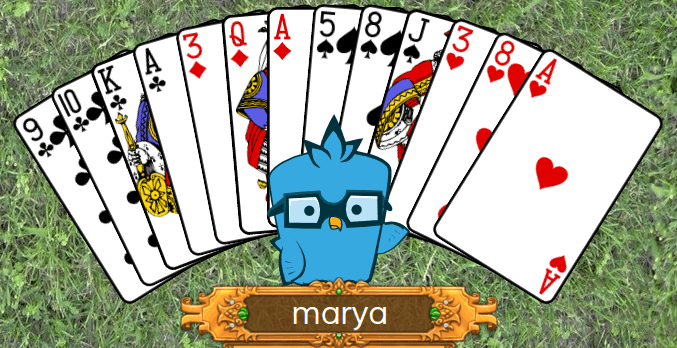
In the game where I held this hand, I took tricks with all the cards I counted on and ended up taking 1 extra trick too.
This example shows how the success of your bid depends on how the cards are spread over all the players. A reasonable bid usually works out. But there are times when a reasonable bid just can't be made. Your team may get set, and there's nothing either partner can do about it.
Support your partner
This is a handy place to remind you that Spades is a team game. Say your partner plays a high card, such as an Ace or King, and an opponent trumps the trick. Think carefully about whether you should support your partner by taking an extra trick beyond what you bid, if you can. If the total of all bids is on the high side (13, 12, or even 11), chances are your partner doesn't have much room to spare. Your team needs every trick it can take to make its bid. So look for chances to make up for a lost trick as the hand plays out.
Bidding
- Count your spades before you bid
- Look for Aces and Kings when bidding Reading
Nil bids
Playing as a team